
// QA-to-QE Transformation




// Effort Isn't the Problem. Structure Is.
Most organizations have invested heavily in QA, teams, suites, automation. Yet defects still slip through and quality still gets treated as a cost center, not a capability.
QA Is Overloaded With Execution
Drowning in manual regression and test case admin. Time-to-test is long; time-to-insight is longer.
Automation Impact Is Unclear
Money spent on frameworks and tools, but no visibility into what automation actually protects.
Quality Decisions Happen Too Late
Defect severity discovered days before release. Risk is managed through hotfixes and heroics.
Releases Rely on Manual Judgment
Sign-off depends on who's available, not on data. Repeatability and predictability suffer.
A QA to quality engineering transformation replaces heroics with a repeatable, evidence-based path to release confidence.
// Six Areas Every Transformation Touches
Test Strategy & Architecture
Moving from ad-hoc testing to a coherent, risk-based test strategy and pyramid.
Automation Portfolio Rationalization
Audit existing automation, retire redundant tests, build a lean, maintainable portfolio.
Shift-Left Enablement
Equip developers with the tools and practices to become the first line of quality defense.
CI/CD Quality Gates
Intelligent gates that run the right tests at the right time, with real-time risk feedback.
AI & Intelligent Tooling
Intelligent test generation, failure analysis, and predictive risk models, integrated properly.
Team Capability & Skills
Training programs and evolved team structures that support QE thinking long-term.
// What QA-to-QE Transformation Really Means
It's not a rebranding exercise. It's a structural shift from "who finds defects?" to "how do we prevent them in the first place?"
Primary Activity
QA executes tests. QE prevents risk and detects it early, throughout the SDLC, not at the end.

Key Metric
QA measures coverage percentage. QE measures release confidence and business outcomes.

Timing
QA runs at the end of the cycle. QE is integrated from day one, alongside development.

Organizational Role
QA is often a bottleneck that gates releases. QE is an accelerator that enables faster, safer ones.

// A Five-Phase Quality Engineering Transformation Roadmap
Each phase builds on the last, with clear deliverables and stakeholder alignment at every step.
Current State Assessment
//01Interviews, test infrastructure audit, automation ROI analysis, and a QE maturity benchmark. (2-3 weeks)
Vision & Target State Definition
//02Co-create a 12-month north star for quality engineering, with success metrics your leadership signs off on. (3-4 weeks)
Roadmap Design
//03A prioritized backlog: quick wins within 90 days, strategic changes in 3-6 months, transformation enablers in 6-12 months. (4-6 weeks)
Enablement & Execution Support
//04Hands-on coaching through test strategy, automation redesign, CI/CD gates, and team upskilling. (6-12 months)
Continuous Optimization
//05Monthly metrics reviews. The roadmap evolves as your organization and its risks do. (Ongoing)
// Proven in the Real World.
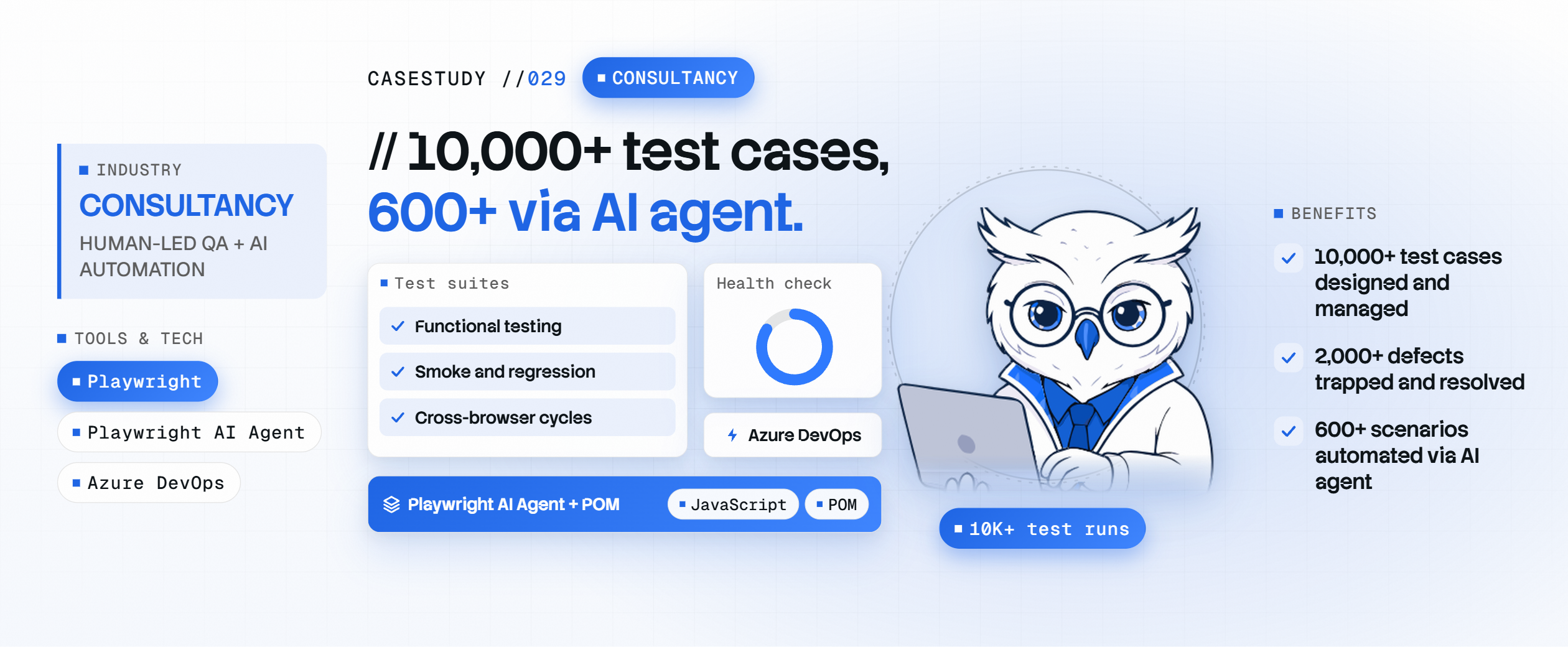
// QA Transformation Consulting,
Structured Around Your Needs
Three ways to engage, depending on whether you want direction, hands-on execution support, or ongoing validation.
Roadmap-Only Consulting
8-12 weeks. Phases 1-3 delivered in full: assessment, vision, and roadmap design.
Best For:Organizations that want clarity and direction but plan to execute internally.
Includes:Executive steering, stakeholder alignment, a comprehensive business case, 2 quarterly reviews post-delivery.

// How This Roadmap Fits Within QE Consulting
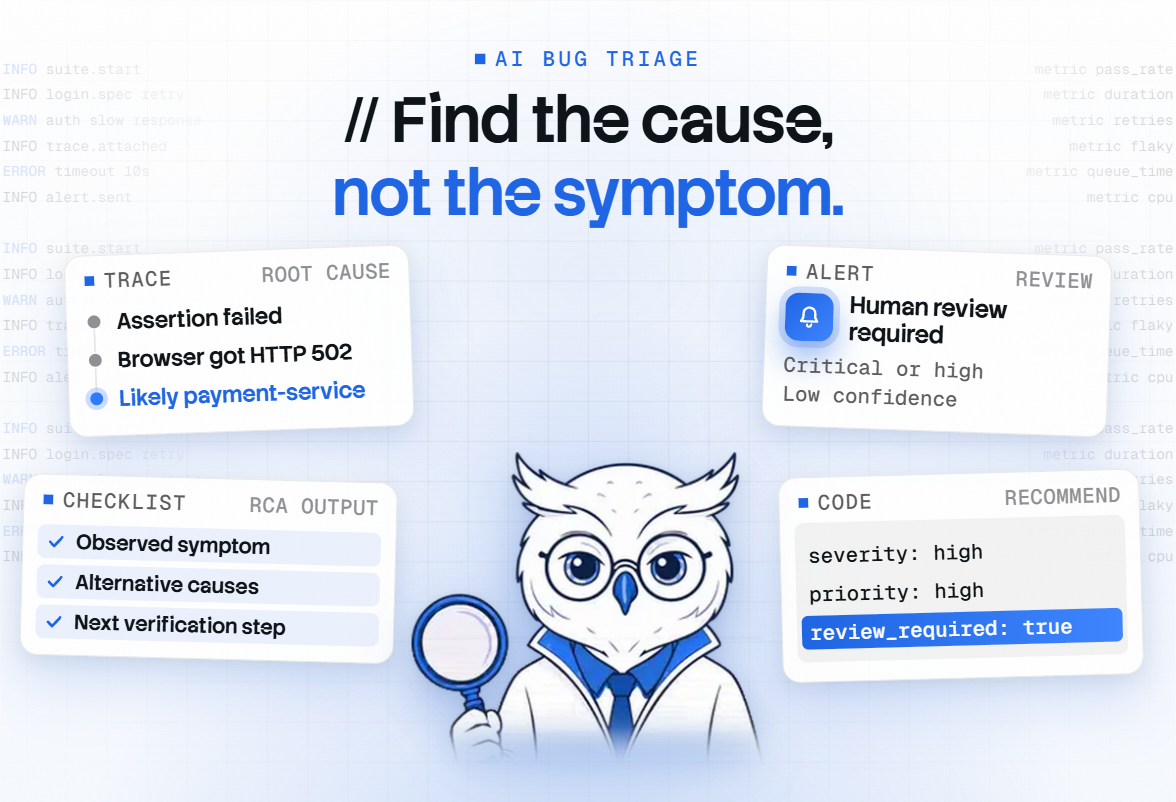
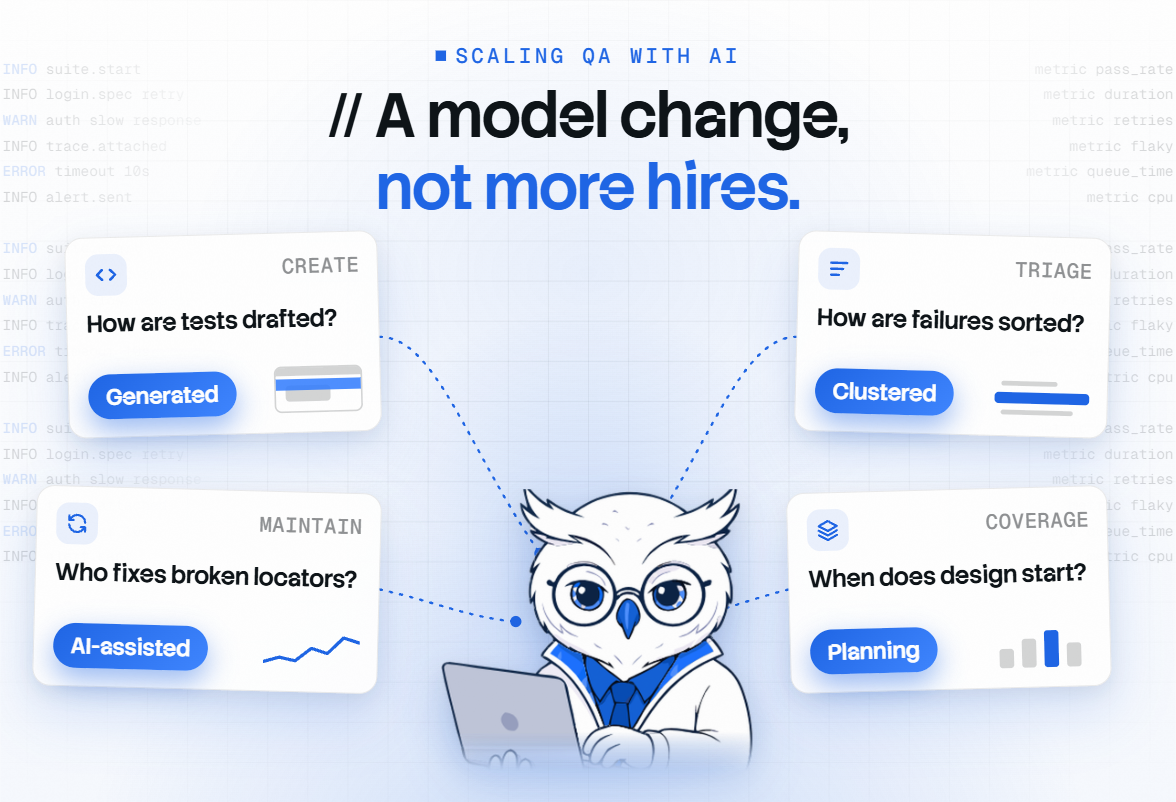
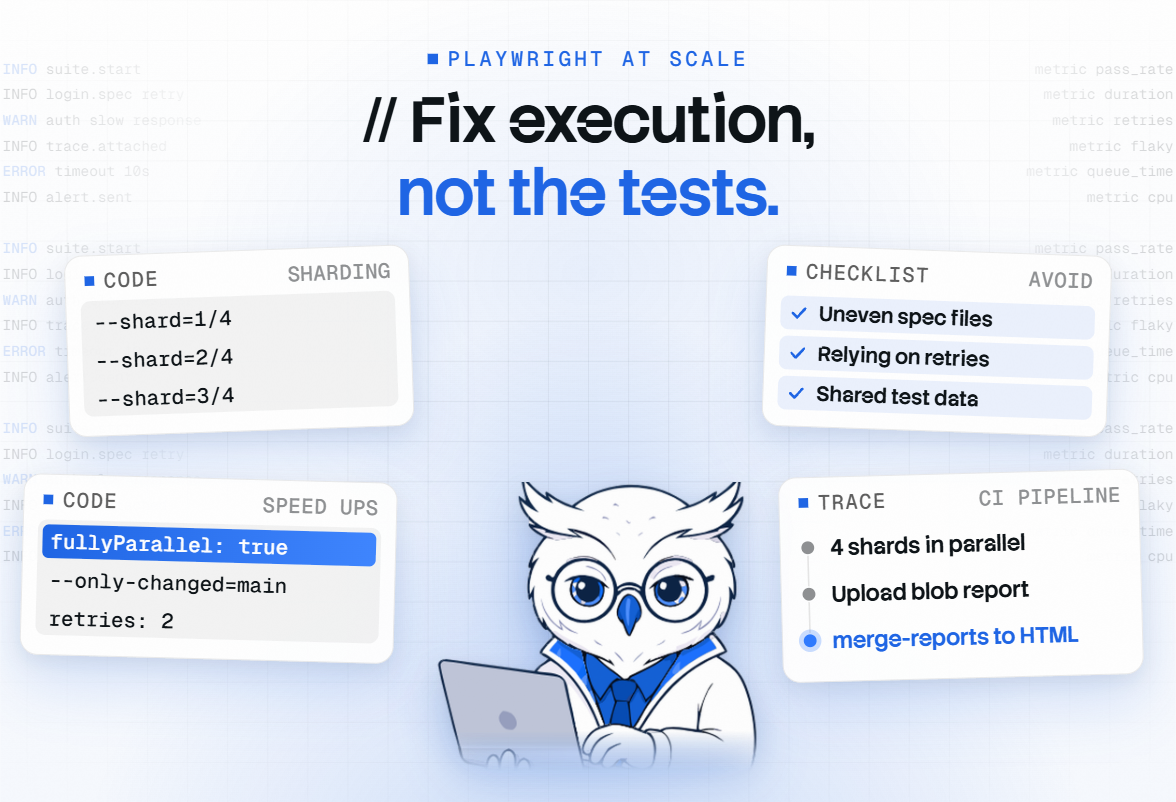
// Latest Articles.

// Questions, Answered.
How is QA different from QE?
QA focuses on test execution, coverage percentage, and defect detection after the build is done. QE focuses on risk prevention, release confidence, and predictive insight built in throughout the SDLC, an accelerator, not a bottleneck.
How long does a QA to QE transformation take?
A full transformation across all five phases typically spans 6-12 months. Assessment through roadmap design takes 8-12 weeks. Some quick wins, like shift-left testing, can deliver value within 90 days.
When does an organization need a quality engineering transformation roadmap?
When automation investment is high but returns are low, regression delays releases by days, QA is seen as a bottleneck rather than a partner, AI initiatives lack a quality foundation, or leadership wants predictable releases instead of surprises at sign-off.
Do we need to stop current testing during the transition?
No. This is a managed transition, not a switchover. Your current QA function keeps running while the future state is designed, and later phases retire old practices gradually, with overlap, not all at once.
What if our QA team resists the change?
Resistance is normal. The roadmap moves QA engineers into test design, architecture, and strategy roles, an elevation, not a demotion. Early quick wins build momentum, and upskilling happens before roles shift.
How do you measure progress during the transformation?
Three categories: velocity metrics like test turnaround time, quality metrics like post-release defects, and business metrics like release cycle time and confidence. Monthly dashboards track all three.
Is this suitable for regulated industries like financial services or healthcare?
Yes, regulated industries often benefit most. Compliance demands traceability and repeatability, both of which strengthen QE maturity, and intelligent gates build compliance checks into the pipeline rather than bolting them on later.
How is this different from agile coaching?
Agile coaching optimizes the development process, sprints and cadence. This roadmap optimizes the quality practices inside that process. You can be agile and still have poor quality practices, this ensures quality is engineered in, not bolted on.
What's a realistic ROI expectation?
Conservatively: breakeven to 1.5x ROI in year one, 2-3x by year two as benefits compound, and 3-5x by year three once quality becomes a strategic advantage rather than a cost center.