
// Autonomous Test Orchestration
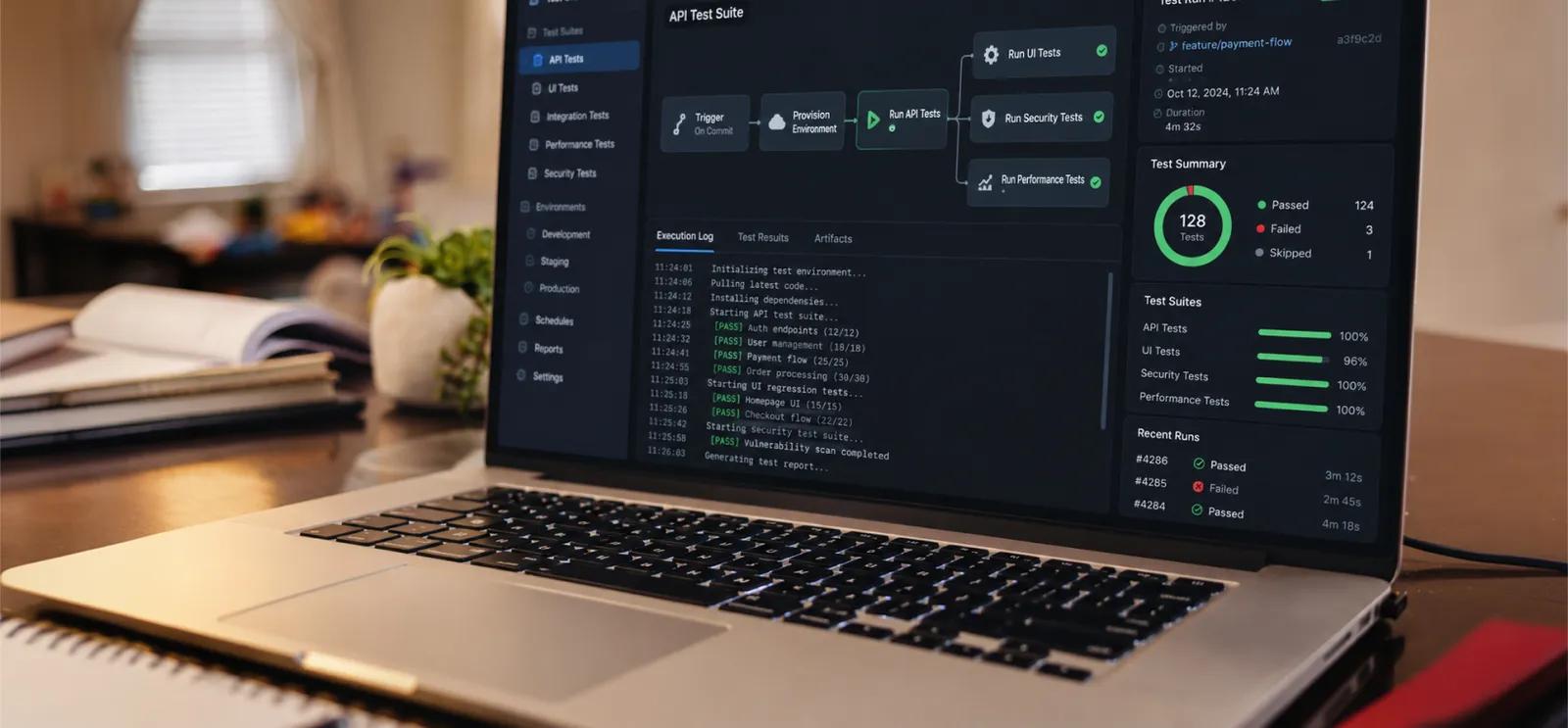



// Why Traditional Test Automation Falls Short
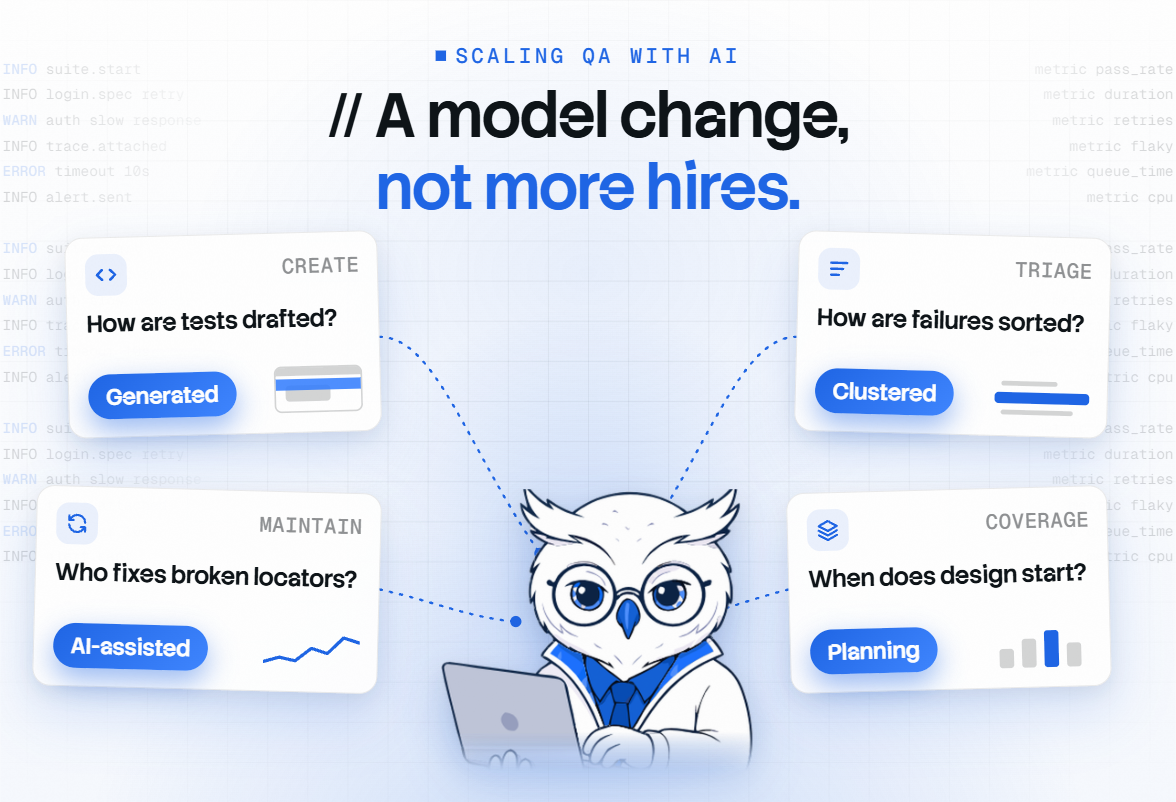
It treats every code change the same, maintains brittle scripts through manual effort, and forces a choice between coverage and speed.
Brittle Scripts, Constant Upkeep
Every UI or API change breaks tests. Engineers spend 40-60% of their time on maintenance instead of strategy.
One Suite for Every Change
A CSS tweak triggers the same full regression run as a payment-flow change. Most of it is irrelevant.
Coverage vs. Speed Tradeoff
Run everything and wait, or run less and risk missing a real defect. Teams shouldn't have to choose.
No Risk Intelligence
Test selection is manual and intuition-based. There's no data behind what actually needs testing.
Jignect's autonomous QA orchestration engine starts by mapping your risk signals, before touching a single pipeline.
// Orchestration Across Your Delivery Pipeline
Shift Left
Pre-commit hooks select relevant unit tests. Feedback in 2-5 minutes.
CI/CD Gate
Risk-weighted regression, parallelized and scoped to the change.
Pre-Production
Curated suite by risk tier. Hours instead of a full-day run.
Production
Synthetic journeys validate critical flows continuously.
// Four Pillars of Intelligent Orchestration
Intelligent Test Selection
Reads code diffs and risk patterns, selects only the tests that matter for that change.
Adaptive Execution
Dynamic parallelism and scheduling get results back inside your workflow window.
Self-Healing & Recovery
Detects and repairs brittle selectors automatically, flags low-confidence fixes for review.
Feedback-Driven Learning
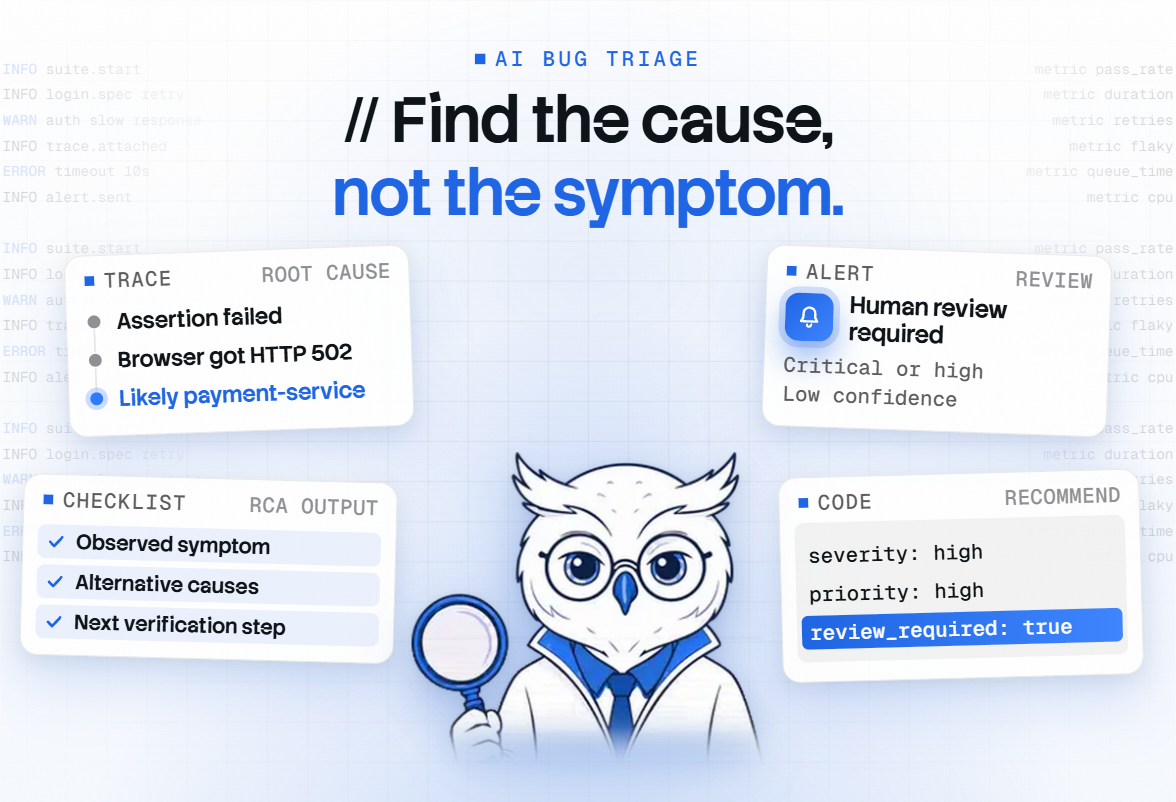
Flaky test detection and root cause analysis make every run smarter than the last.
// Common Orchestration Scenarios
A few of the situations where risk-based orchestration makes the clearest difference.
Microservices Regression Testing
A change to one service shouldn't trigger tests for all twelve. Orchestration identifies affected services and dependents, and prioritizes contract tests, cutting a multi-hour run to minutes.

Mobile App Releases (iOS + Android)
Instead of testing every device and OS combination, risk-based selection identifies which matrix cells actually matter for a given change, cutting execution time significantly.

API Contract & Backward Compatibility
When a schema changes, every contract test tied to it is automatically selected, so breaking changes are caught before a client integration is.

// From Assessment to Continuous Optimization
Rolled out thoughtfully, one pipeline at a time.
Readiness Assessment
//01Team interviews and infrastructure audit. 2-4 weeks.
Strategy & Design
//02Orchestration strategy and CI/CD integration plan. 4-6 weeks.
Pilot & Rollout
//03Shadow mode, calibration, then phased go-live. 4-8 weeks pilot.
Continuous Optimization
//04Ongoing model retraining and quarterly reviews.
// Proven in the Real World.
// Engagement Models Built Around Your Readiness
From a focused diagnostic to a full-scale, ongoing partnership.
Orchestration Readiness Assessment
A focused 2-4 week diagnostic across your test infrastructure, risk signals, and pipeline maturity.
Best For:Teams unsure where to start.
Includes:Readiness report, top opportunities, 6-month roadmap.

// How This Fits Your QE Journey
// Latest Articles.

// Questions, Answered.
What is Autonomous Test Orchestration and how is it different from test automation?
Test automation is writing scripts that execute tests. Test orchestration is the layer above that decides what to test, when, and how. Autonomous Test Orchestration, sometimes called agentic test orchestration, adds AI to that decision layer: it reads code changes, assesses risk, selects the minimal sufficient test set, and repairs broken scripts on its own.
Does ATO replace test automation engineers?
No. It removes manual script maintenance and manual test selection. Engineers shift toward strategy, model calibration, and failure analysis instead of spending most of their week fixing broken selectors.
How long does implementation take, and will our pipelines be disrupted?
Full rollout typically takes 6-12 months depending on complexity, but each pipeline runs in shadow mode for 2-3 weeks first, recommending without enforcing, so there's no disruption during rollout.
How accurate is self-healing, and what happens when it fails?
Most reliable for selector and schema-level changes, less reliable for complex logic changes. Every repair is logged with a confidence score, high-confidence fixes auto-apply, lower-confidence ones are flagged for review.
Is this tool-agnostic? We use Selenium, Cypress, Playwright, and Appium.
Yes. It orchestrates on top of your existing stack and CI/CD system without requiring you to rewrite existing test scripts.
How is data privacy and security handled?
Orchestration only needs code diffs, test metadata, and CI/CD logs, not your full source code, secrets, or production data. An on-premise option exists for teams that require full data residency.
What's the ROI timeline?
Early wins show up during the first pilot: reduced test count and faster execution. Freed engineer capacity and lower defect leakage typically become visible over the following two to three quarters.
Are there cases where we shouldn't use ATO?
Yes. If your test suite is small, you ship infrequently, or you have little automated coverage to begin with, the overhead outweighs the benefit. Build a solid automated suite first, then revisit orchestration.
How does it handle flaky tests?
It tracks results over many runs to detect inconsistent tests, investigates the likely cause, and either repairs or quarantines the test until it's reliable again.
What if a risk-based decision misses a defect?
Every decision is logged and explainable, so a miss can be traced back to why a test was deprioritized and the model adjusted. Risk-weighted selection tends to catch high-impact issues earlier, not later.