
// AI Model Behavior & Risk Testing




// Accuracy Alone Is Not Enough
A model can post 92% accuracy pre-deployment and still fail your business in ways that metric never measured.
Stochastic, Not Static
The same input can produce different outputs. A single accuracy number hides that variance entirely.
Confident Doesn't Mean Correct
Models can be highly confident while hallucinating, confidence and correctness aren't the same signal.
Silent Drift Over Time
Provider updates and shifting real-world data change behavior even when your code never changes.
Averages Hide Edge Cases
A high average accuracy can still mean weekly failures on the specific cases that matter most.
AI model risk testing measures how the model actually behaves, not just how it scored on a benchmark.
// Four Dimensions of Model Risk Testing
Hallucination & Factuality
Exact hallucination rates, citation tracking, and RAG grounding consistency, benchmarked against ground truth.
Model Drift & Regression
Continuous checks that a provider's "smarter" update hasn't quietly broken your specific business logic.
Semantic Consistency
Same intent, different phrasing, same answer. Tested across 1,000+ prompt variations.
Stress & Over-Refusal
Where the model is too cautious to be useful, or where reasoning breaks down under complex context.
// Five Ways We Observe Real Behavior
Scenario-Driven Behavior Testing
Real production patterns and adversarial scenarios compiled into test suites that observe actual behavior, not simulated ones.

Input Sensitivity Analysis
Systematic input variation to find brittle decision boundaries where small changes cause disproportionate swings.

Confidence Calibration
Measuring whether model confidence actually tracks correctness, and where it doesn't.

Failure Mode Exploration
Deliberately pushing the model past what it should decide, and documenting how it fails and recovers.

Outcome-Based Validation
Mapping decisions to real business impact, not just optimizing for a statistical score.

// Documented, Actionable Findings
Behavior Risk Report
Every dimension scored, with severity and business impact mapped to each finding.
Bias & Drift Baseline
A benchmark to compare against as the model evolves, so drift doesn't go unnoticed.
Remediation Guidance
Specific fixes, fine-tuning targets, and guardrail recommendations, not just findings.
Monitoring Framework
What to track continuously so behavioral risk is caught before it reaches users.
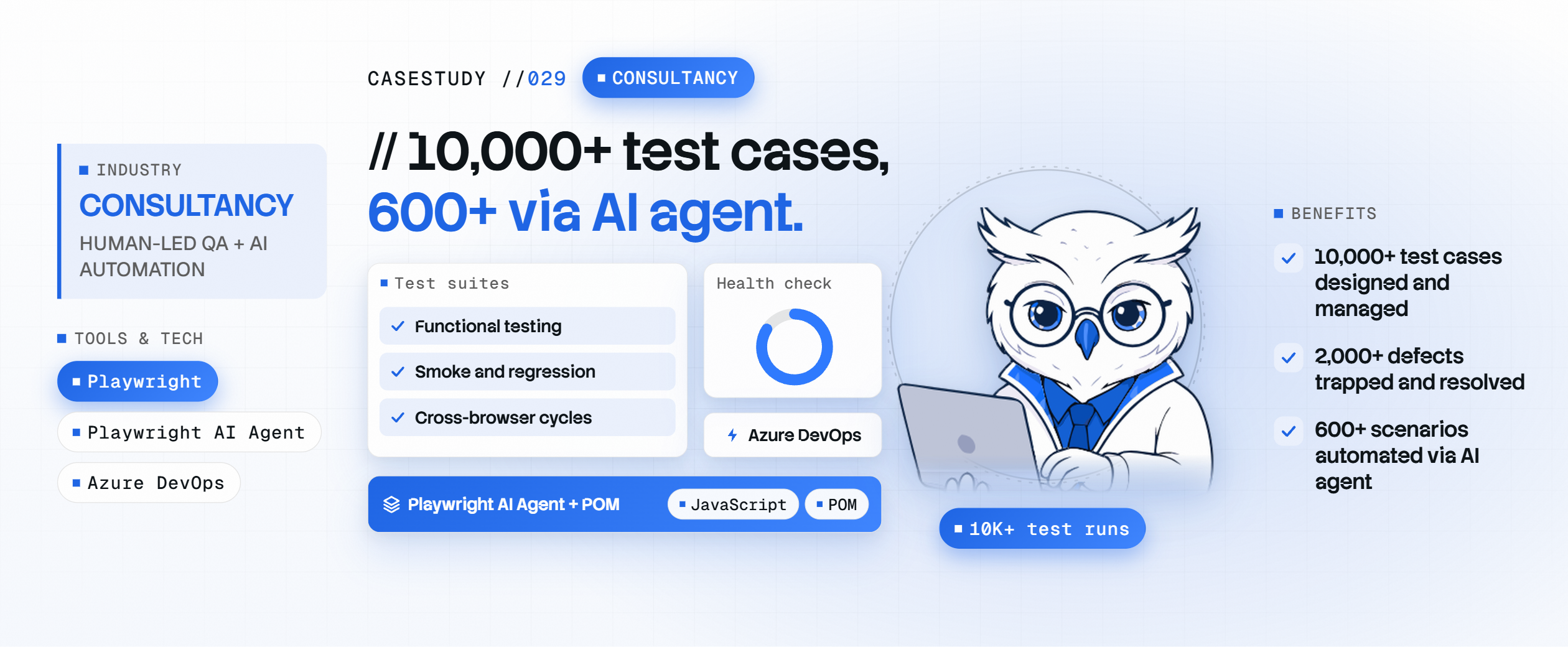
// Proven in the Real World.
// Three Engagement Models
Model Behavior Assessment
A focused pass across the four risk dimensions on your current model.
Best For:Teams who trust their accuracy score but haven't tested behavior.
Includes:Risk scorecard, top findings, prioritized recommendations.

// Where This Fits in AI App Assurance
// Latest Articles.

// Questions, Answered.
What is AI model risk testing?
AI model behavior testing that looks past accuracy scores to how a model actually behaves: hallucination rate, consistency across phrasing, confidence calibration, and how it fails under stress.
Isn't high accuracy in testing enough?
No. A model can show 92% accuracy pre-deployment and still misidentify critical details weekly in production, accuracy is an average, not a guarantee against the failures that matter to your use case.
How is this AI bias testing different from a one-time fairness audit?
A one-time audit checks a snapshot. Bias can worsen as a model drifts, so testing runs continuously, tracking whether disparities widen as the model, data, or usage evolves.
What is model drift, and why does it happen without us changing anything?
Unintentional behavioral change over time, driven by real-world data diverging from training data, evolving user behavior, or a provider silently updating the underlying model.
Do you test provider-hosted models like OpenAI or Anthropic, not just custom ones?
Yes. Provider-hosted models still drift as vendors update them. Continuous regression testing catches when an update silently breaks your specific business logic.
Who typically commissions this testing?
Teams shipping LLM features to production, especially regulated or high-stakes domains like legal, healthcare, and financial services, and anyone whose accuracy metrics look fine while complaints keep coming in.
What kinds of risks does this catch?
Four categories: business risk like silent quality degradation, ethical risk like bias amplification, operational risk like brittle predictions under load, and compliance risk like undocumented policy violations.