
// Expert Functional Testing Services




// Your Sprint Is Done.
But Is Your Software Actually Working?
Requirements Are Assumed, Not Verified
Coverage is only as good as the requirements it's based on. Ambiguous or silently changed requirements leave gaps that become defects your users find first.
Test Cases Written to Pass, Not to Break
Most test suites are optimized for the happy path. Real users enter invalid data and push business logic in ways only adversarial testing uncovers.
Manual and Automated Treated as Rivals
The real question isn't manual versus automated, it's what each layer actually covers. Most teams over-automate the UI and under-invest in judgment-driven exploratory testing.
Jignect brings all three into balance - with the human judgment to find what matters and the AI layer to make sure nothing is missed.
// Functional Coverage Across Every
Layer and Every Type of Risk
Unit Testing
Validation at the smallest testable unit - maximizing coverage without brittle tests that break on every refactor.
White-Box Testing
Testing with full visibility into code and internal logic - verifying branches, conditions, and paths black-box cannot reach.
Gray-Box Testing
A hybrid of user perspective and selective code knowledge - ideal where DB, API, or internal state must be validated alongside behavior.
UI Testing
Every screen, form, and navigation flow verified across browsers, devices, and resolutions to catch presentation-layer defects.
Integration Testing
Validation of how modules, services, and APIs interact - ensuring contracts hold and data flows correctly between systems.
End-to-End Testing
Full simulation of real user journeys across your entire stack - checkout, onboarding, submissions, multi-step workflows.
Black-Box Testing
Pure input/output validation against requirements - catching gaps between what the spec says and what the implementation does.
Regression Testing
Suites that run quickly and cover broadly - catching the side effects new features introduce where nobody thought to look.
Smoke Testing
A rapid pass through the most critical functionality of a build - confirming it is stable enough to proceed to full testing.
Sanity Testing
Focused verification that a specific change is fixed and hasn't broken anything obvious nearby - the first gate before regression.
Acceptance Testing (UAT)
Our SIT and UAT testing services validate against business requirements from the end-user perspective, confirming your software is ready for real-world use.
Exploratory Testing
Unscripted, human-led investigation with session-based charters - visibility without sacrificing creative freedom.
Negative & Edge-Case Testing
Systematic matrices for invalid inputs, boundary conditions, and unexpected behavior - because most defects live at the edges.
// Functional Testing Across
Every Platform You Ship On
Web Applications
Responsive and progressive web apps validated across browsers, viewports, and OS combinations.

Mobile Apps
Native iOS and Android plus cross-platform builds, tested on real devices and device farms.

Desktop Software
Windows, macOS, and Linux desktop applications, including installers, updates, and offline states.

IoT & Connected Devices
Connected devices and embedded systems tested across firmware updates, pairing, and real-world network conditions.

// An Approach That Finds Defects,
Not Just Checks Boxes
A test strategy is only as good as the defects it finds. Ours is built on structured coverage, risk-thinking, and continuous requirement alignment.
Requirements-First Test Design
//01We analyze requirements first: user stories, acceptance criteria, API contracts, catching ambiguities and missing cases before a single test case is written.
Risk-Based Test Prioritization
//02We focus coverage on business-critical workflows, high-frequency journeys, and recently changed areas, so the highest-value tests run first.
Equivalence Partitioning & Boundary Value Analysis
//03Systematic techniques that generate the smallest set of test cases for the broadest coverage, more defects found with less redundant effort.
Structured Exploratory Testing
//04Session-based testing with charters, time-boxes, and debriefs, structured visibility into unscripted testing without losing the creative freedom that makes it work.
Continuous Requirement Alignment
//05A live traceability matrix maps every test case to its requirement and flags gaps the moment requirements change, not after the fact.
Defect Classification & Root Cause Reporting
//06Every defect is categorized by type, severity, origin layer, and root cause, so your team fixes the pattern, not just the instance.
// Human Judgment, Machine Scale.
Together.
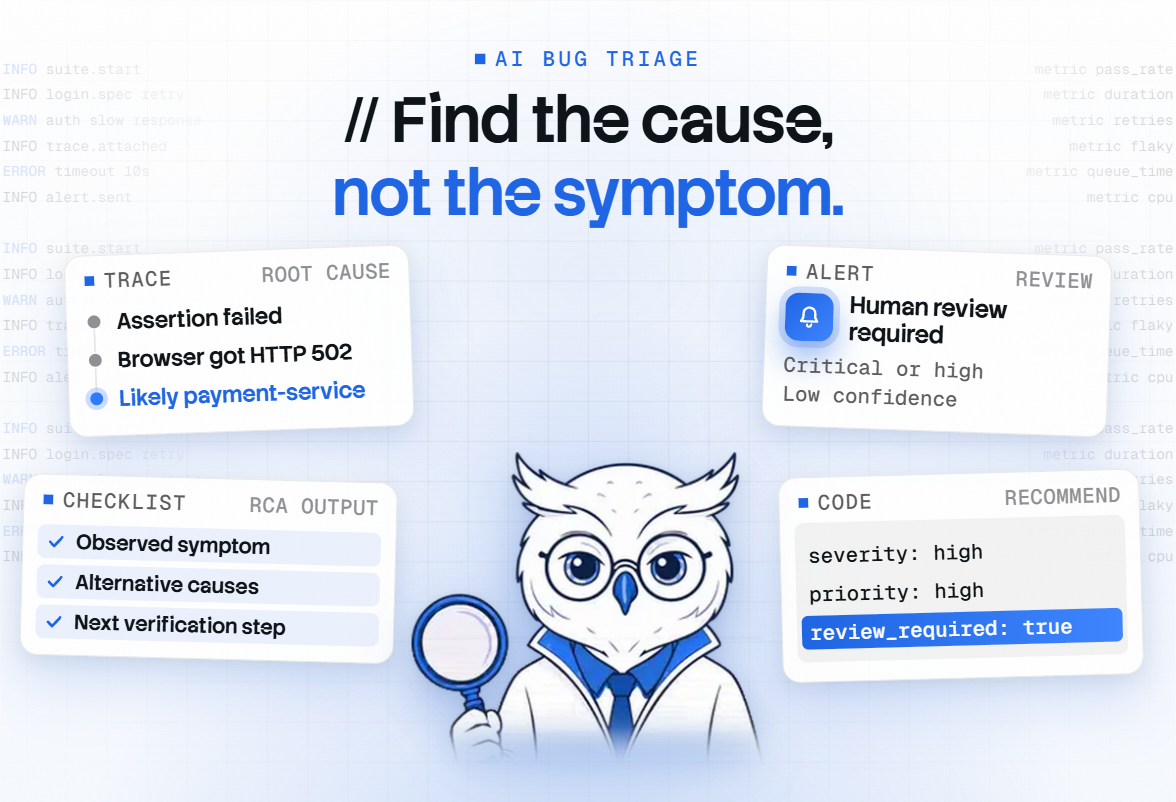
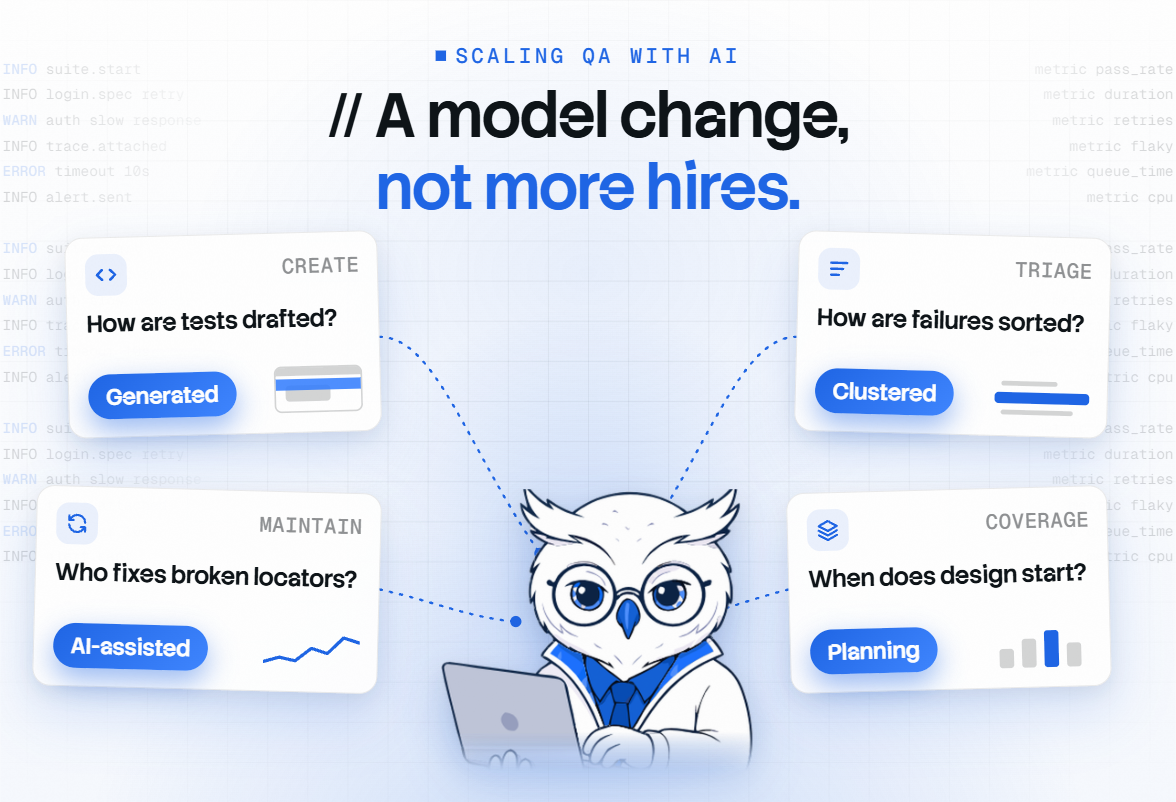
AI-Powered Test Coverage Analysis
AI analyses your requirements to flag coverage gaps automatically: scenarios not mapped to test cases, implied boundary conditions, and overlooked negative scenarios.
Intelligent Test Case Prioritization
Before every run, AI analyses recent code changes, defect history, and risk signals to rank test cases by likelihood of finding a defect.
AI-Assisted Exploratory Testing
Exploratory testers work with an AI co-pilot that suggests unexplored paths, flags untested states, and surfaces patterns from past sessions.

// The Right Tools for Functional Coverage Across Every Layer




// What You Actually Receive
Test Environment Setup Guide
Documented configuration, test data, and access prerequisites, so any engineer can reproduce the setup.
Test Plan & Checklists
Scope, objectives, risk profile, entry/exit criteria, and per-release checklists your team can run independently.
Test Cases
A maintained, traceable test library, every case mapped to a requirement, versioned and handed over in your tooling.
Bug Reports
Reproducible defect reports with steps, evidence, severity, origin layer, and root-cause classification for actionable fixes.
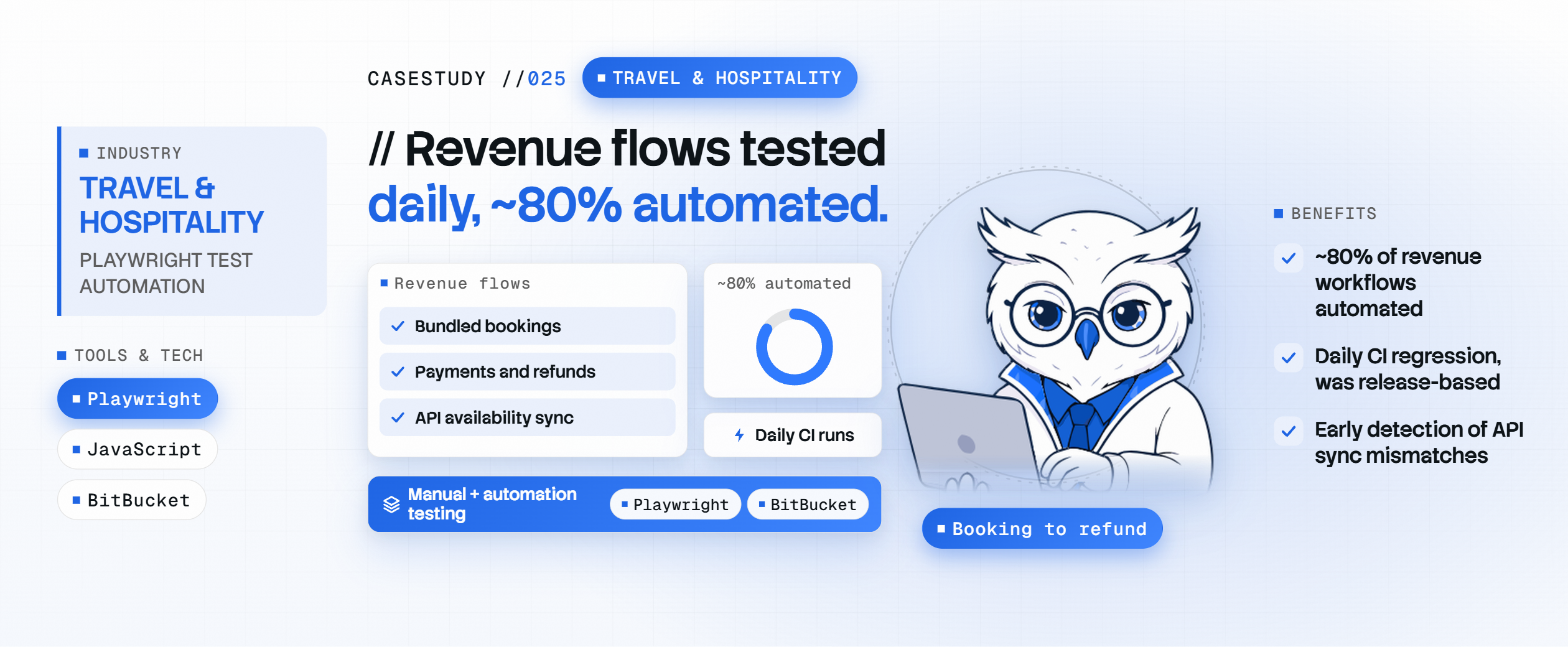
// From 3-Day Regression Bottleneck
to 4-Hour Automated Pipeline.
// Latest Articles.

// Questions, Answered.
How do you ensure functional coverage in an AI-driven application?
AI outputs are non-deterministic, the same input won't always give the same output. We test the functional contract instead: responses stay within acceptable parameters, guardrails engage, and errors handle correctly, combined with our AI App Assurance practices for AI-heavy applications.
Is manual functional testing still relevant in the era of automation?
Yes. Scripted manual testing for repetitive regression is increasingly automated, but exploratory testing, coverage analysis, and acceptance testing need human judgment no framework replicates. We apply automation for speed, human Quality Engineering for discovery, deliberately, together.
How do you handle "Requirement Drift" during the sprint?
Every test case links to its source requirement in a live matrix. When a requirement changes, affected test cases get flagged automatically for review, plus a sprint-midpoint sync to catch drift early.
Can you perform functional testing on headless or API-only architectures?
Yes, and often more thoroughly with API testing, since the functional contract is explicit in the spec. We test REST and GraphQL against schema definitions, validating requests, responses, auth, and business logic using Postman, RestAssured, Karate, and Pact.
How do you validate complex business workflows that span multiple applications?
We map the full workflow, identify state changes at each system boundary, and design test cases for both individual system behavior and the aggregate outcome, using component-level testing with mocked dependencies where end-to-end isn't feasible.
What is the difference between Smoke, Sanity, and Regression testing?
Smoke testing is a broad, shallow check confirming a build is stable enough to test. Sanity testing confirms a specific fix works without breaking nearby functionality. Regression testing validates the entire application hasn't broken from recent changes.
How do you test for "Negative" scenarios?
We build negative test matrices using equivalence partitioning and boundary value analysis: invalid data types, out-of-range values, empty required fields, injection patterns, and unauthorised actions, validating both the response and the recovery.
Do you support User Acceptance Testing (UAT)?
Yes, in two ways: we design and run UAT scenarios ourselves from an end-user perspective, and we support your team's own UAT process, reviewing acceptance criteria and triaging real defects from environment noise.
How do you handle localized functional testing for different markets?
Beyond translated text: date, time, and currency formats, right-to-left layouts, locale-specific regulations like GDPR or PDPA, and character encoding for non-Latin scripts, tested with locale-specific matrices and in-market testers where needed.
What metrics do you use to measure functional quality?
Requirements Coverage , Defect Detection Efficiency , Defect Escape Rate , Test Execution Pass Rate , and Defect Age , tracked per sprint and trended over time, so you see whether quality is improving, not just whether tests ran.