
// QA-Enabled Release Strategies




// Most Teams Test Thoroughly. So Why Does Every Release Still Feel Like Roulette?
Testing isn't the gap. The gap is between "tests passed" and "safe to release," and most teams don't have a way to bridge it.
Test Completion ≠ Release Readiness
A green pipeline tells you tests ran, not whether the release is actually safe to ship.
Quality Signals Are Fragmented
Test results, monitoring, and incident history live in separate tools no one checks together at release time.
Go/No-Go Is Opinion-Driven
The decision comes down to who's in the room and how confident they feel, not what the evidence says.
Production Issues Surface Anyway
Despite a fully green pipeline, defects still slip through because the gate never asked the right question.
Release readiness testing replaces "did the tests pass" with "is this actually safe to ship."
// A Framework Your Team Actually Runs On
QA-Enabled Release Framework
The complete gating model, documented and ready to implement in your pipeline.
Release Readiness Scorecard
Quality signals tied to customer KPIs, giving a go/no-go decision that reflects real risk.
Quality Gate Definitions
Exactly what each gate checks and what threshold triggers a block, no ambiguity at decision time.
Risk-to-Release Mapping
Which changes need canary rollout, which don't, mapped to your actual risk tolerance.
// The Release Engineering Toolkit
Automated Quality Gates
Pass/fail decisions built into the pipeline, no manual checklist review required.

Feature Flag & Canary Testing
Validate a change on a fraction of traffic before it ever reaches everyone.

Blue-Green & Shadow Deployment
Run the new version alongside the old one, catch issues with zero customer impact.

AI-Powered Rollback Orchestration
Anomalies trigger automated rollback in under a minute, often before anyone notices.

// From Deployment to Quality Release
QA-enabled release management gates on evidence, not opinion.
Continuous Evaluation
//01Quality signals monitored through the release, not just checked once before it ships.
Intelligent Quality Gates
//02AI confidence scoring replaces a manual checklist as the basis for the go/no-go call.
Evidence-Based Decisions
//03Every release decision is traceable to the data behind it, not a feeling in the room.
Shift-Left & Shift-Right
//04Risk is caught before release through predictive gates, and validated again after, through production signals.
// Proven in the Real World.
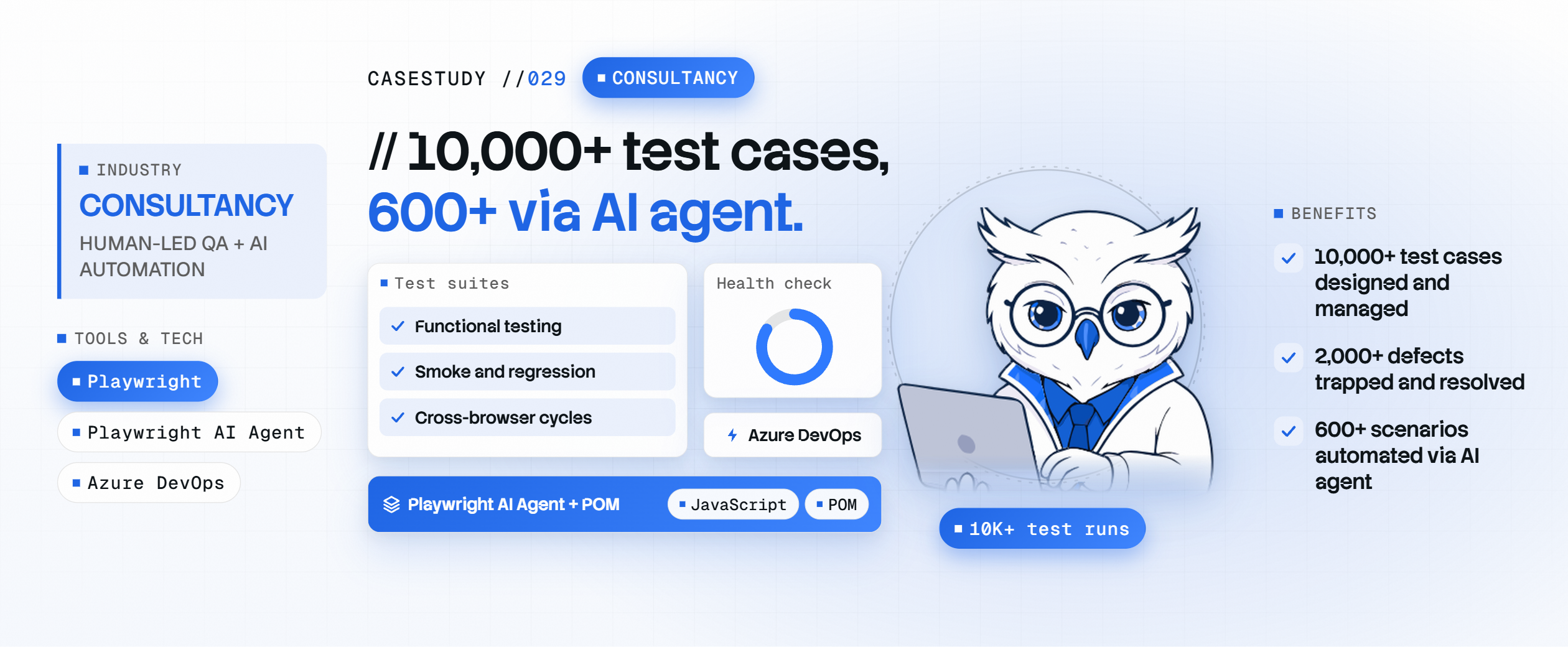
// Release Quality Gate Services,
Scoped to You
Release Strategy Assessment
A review of your current release process, where risk actually gets discovered, and how decisions get made today.
Best For:Teams unsure why releases still feel risky despite thorough testing.
Includes:Process audit, gap analysis, prioritized recommendations.

// How This Completes Your QE Consulting Journey
// Latest Articles.

// Questions, Answered.
What is release readiness testing?
Testing that answers a specific question: is this release actually safe to ship, backed by quality signal evidence and AI confidence scoring, rather than a checklist of completed test cases and a gut-feel go/no-go call.
How is QA-enabled release management different from a traditional process?
Traditional releases gate on checklist completion and opinion-driven sign-off, with risk discovered after the fact. QA-enabled release management gates on evidence and AI confidence scoring, catching risk before release.
Does this work with canary or blue-green deployments?
Yes, it's built for them. Feature flag and canary testing, blue-green and shadow deployment validation, and AI-powered rollback orchestration are core capabilities, not add-ons.
How fast is automated rollback compared to manual rollback?
Manual rollback typically takes 30 minutes or more once an issue is confirmed. Automated, AI-monitored rollback triggers in under a minute, often before customers notice.
Can this help us release more often without more risk?
Yes, that's usually the biggest shift. Once releases are gated by evidence instead of opinion, smaller, more frequent releases carry less risk than infrequent large ones, each change is smaller and easier to isolate.
Does this support compliance requirements during release?
Yes, through compliance-as-code. Checks run automatically as part of the quality gate, so validation happens before release, not as a manual audit afterward.
What does a release readiness scorecard measure?
Quality signals tied to customer-facing KPIs, not just internal test pass rates, giving a go/no-go decision that reflects actual customer risk.