
// QAOps Integration Services
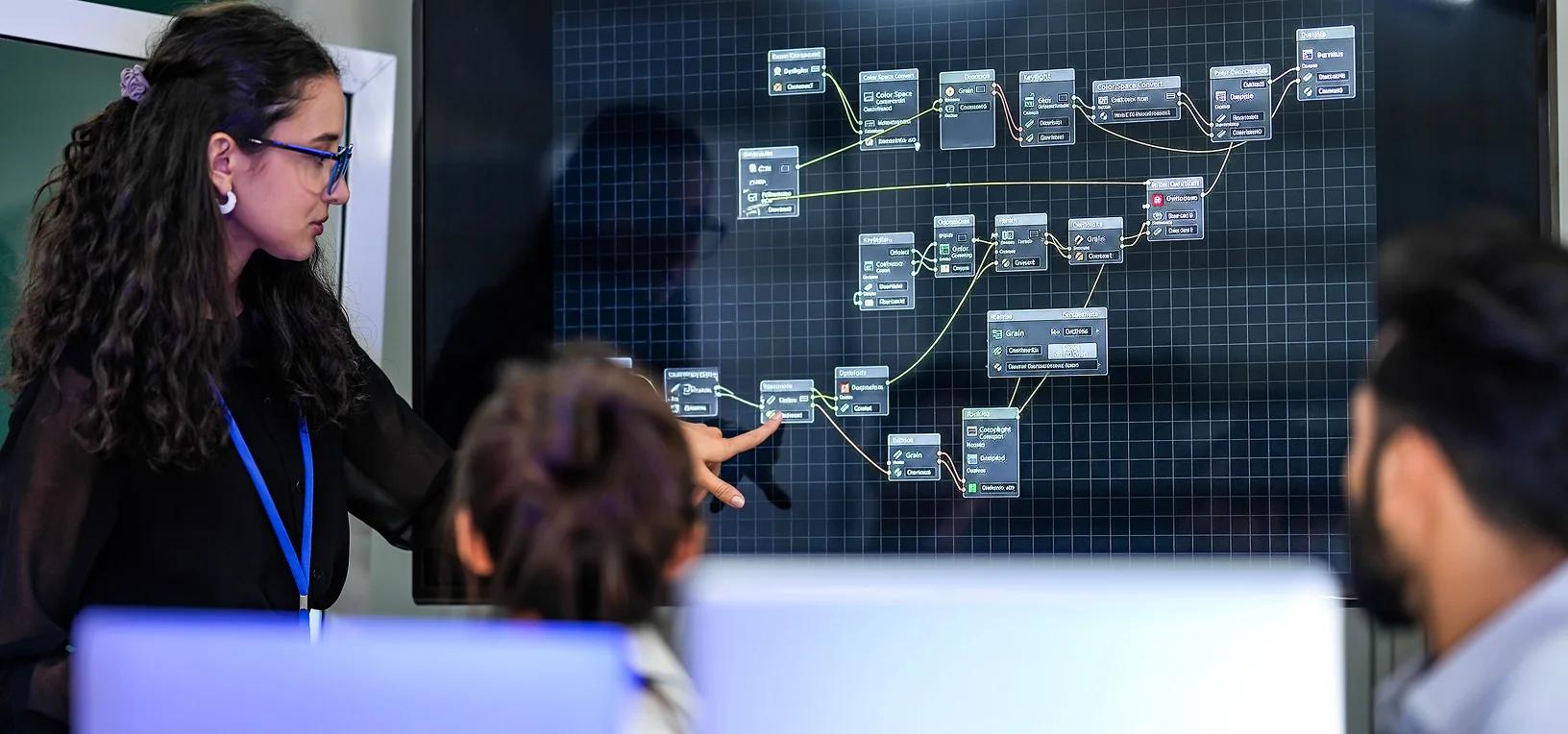



// Why CI/CD Pipelines Are Fast But Fragile
The Manual Hand-off
Automation exists, but someone still has to click run or check the report. Gates are advisory, not enforced.
The Feedback Gap
Developers merge code and find out it failed regression four hours later, once the context is already gone.
Siloed Dashboards
Devs watch Jira, Ops watch Grafana, QA watches TestRail. No one sees the whole picture at once.
Our QAOps implementation services define ownership, visibility, and control over quality signals, so failures get acted on, not ignored.
// The 4 Pillars of QAOps Integration
CI/CD Pipeline Orchestration
Test suites treated like infrastructure, triggered by PR, merge, and tag events, and able to block a pipeline outright.
Intelligent Quality Gates
Multi-stage gates at commit, PR, and merge replace binary pass/fail with risk-based decisions.
Automated Feedback Loops
Results flow into Slack, Teams, or Jira with full context, so developers fix issues immediately.
Containerized Test Environments
Docker and Kubernetes spin up isolated environments per PR, then tear them down the moment tests finish.

// Your QAOps Toolkit

// Deliverables, Not Just Dashboards
CI/CD Quality Gate Design
Gates mapped to commit, PR, and merge, tuned to your actual risk tolerance.
Automated Feedback Routing
Test signals delivered where your teams already work, with the context they need to act.
Ephemeral Test Environments
On-demand environments per PR that disappear the moment testing ends.
Release Readiness Dashboards
One reliable view of quality, so leadership trusts the go/no-go call.
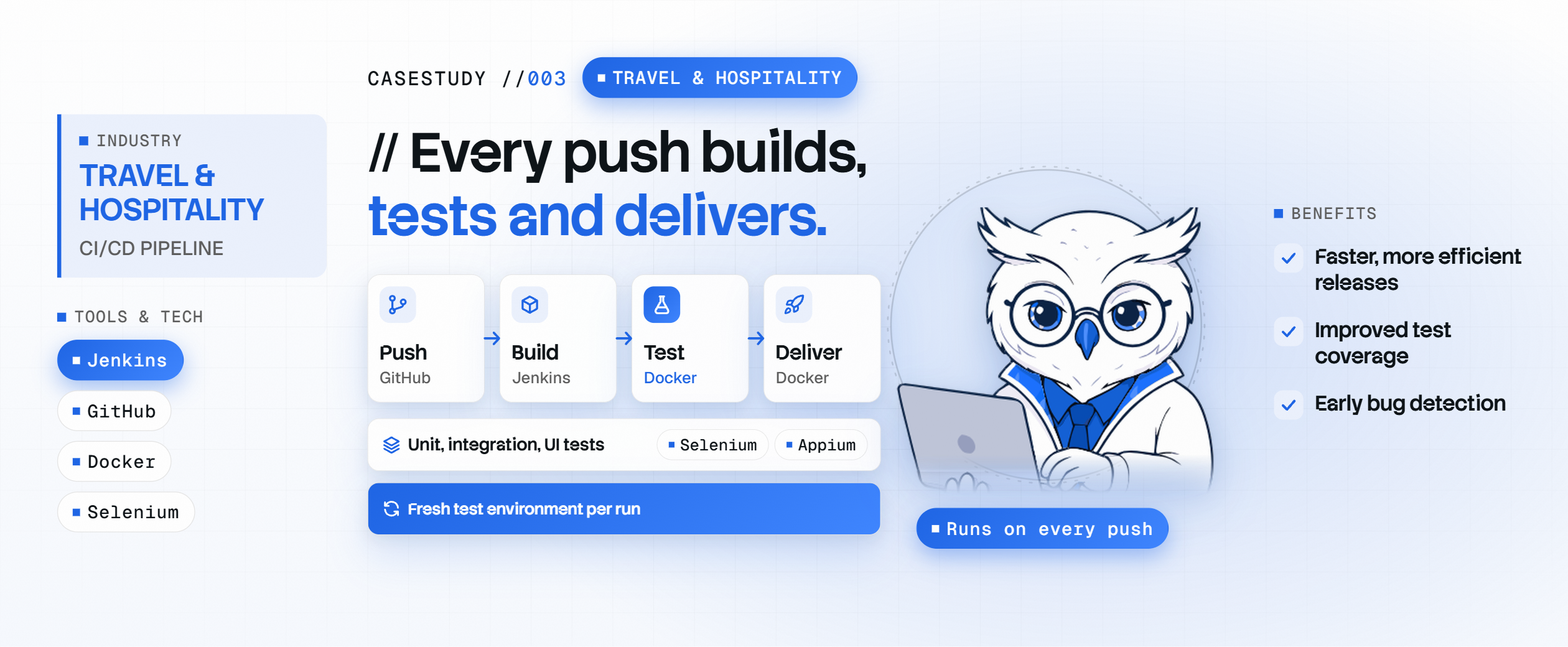
// From 3 Failed Builds a Week to 99% Build Stability.
// Latest Articles.

// Questions, Answered.
When is QAOps integration critical?
It's built for pipelines that fail two to three times a week, delaying every release; teams that merge code even when tests fail because the alerts aren't actionable; releases bottlenecked by manual QA or Ops sign-off with no clear go/no-go criteria; and organizations where no one knows who owns a failing test.
What is QAOps and how is it different from DevOps or TestOps?
QAOps is the operational discipline of embedding quality signals and gates into DevOps workflows. Unlike TestOps, which focuses on test infrastructure, QAOps extends to release governance, ownership, and decision-making.
Is QAOps just another name for automation?
No. Automation is a tool, QAOps is a discipline. Our QAOps implementation services take automation results and make them operational, feeding release decisions and ownership models instead of a dashboard no one reads.
Do we need to change our DevOps tools to use QAOps?
No. QAOps works with Jenkins, GitLab, GitHub, Azure DevOps, or any CI platform you already run, integrated via webhooks, APIs, and plugins.
What problems does QAOps integration actually solve?
Slow release cycles from manual sign-offs, flaky pipelines teams ignore, siloed quality dashboards, and unclear ownership when a test fails.
Does QAOps replace traditional QA or automation teams?
No. It changes how those teams work, shifting QA from chasing test reports to designing quality gates and improving signal quality.
What are quality signals in QAOps?
Structured, actionable outputs from your quality systems, such as pass/fail rates, performance metrics, and flakiness patterns, enriched with context and routed to the right team.
How does QAOps support Shift Left?
By embedding quality gates at commit, PR, and merge, so developers get feedback on code quality before it ever reaches a QA environment.
Can QAOps work with our existing CI/CD tools?
Yes. Our QA DevOps integration services are tool-agnostic, supporting GitHub Actions, GitLab CI, Jenkins, Azure Pipelines, and custom CI setups with no vendor lock-in.
How does QAOps handle flaky tests and unstable pipelines?
Transient failures are isolated and retried automatically. Consistent failures are flagged for analysis instead of blocking the pipeline outright.
Does QAOps slow down delivery with more controls?
No. It removes manual bottlenecks and runs quality gates in parallel with your build, holding up only the changes that carry genuine risk.