
// Continuous Test Automation Services




// Your Pipeline Ships Daily. Can Your Automation Keep Up?
The Maintenance Trap
Teams spend more time fixing flaky tests than shipping features.
The After-the-Fact Delay
Automation that reports hours after code merges arrives too late to matter.
Environment Noise
Stale test data and unmanaged device coverage fail tests for reasons that have nothing to do with broken code.
Jignect builds continuous automation testing that heals itself and reports back before code ships, not after.
// Built Into Every Layer of Your CI/CD Pipeline
Self-Healing Test Frameworks
AI-powered locators identify elements by intent, so a changed CSS selector doesn't mean a broken build.
Intelligent Test Orchestration
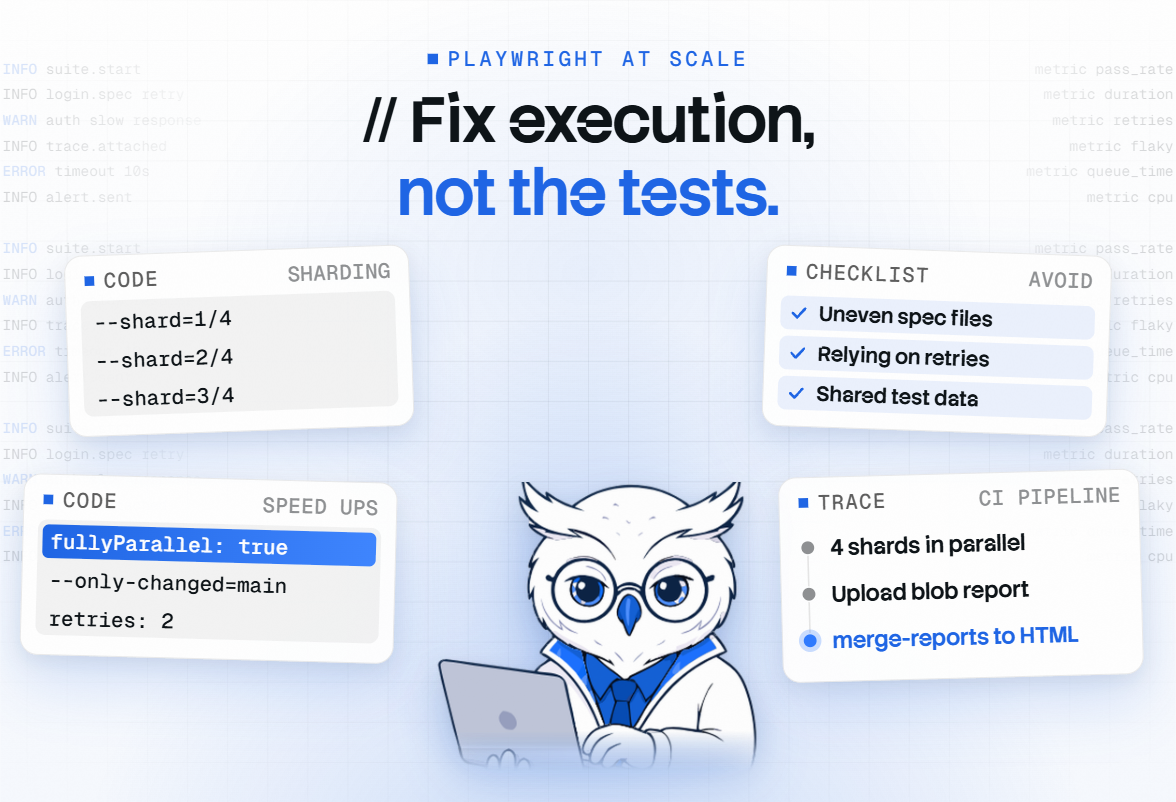
Impact analysis runs only the tests a change actually affects, cutting execution from hours to minutes.
Data-Driven Dynamism
Every test requests its own data and cleans up after itself, removing data-related flakiness.
Headless & Parallel Execution
Docker and Kubernetes run thousands of tests in parallel for instant developer feedback.

// The Right Tools for CI/CD Testing Integration


// Deliverables, Not Just Test Runs
Self-Healing Automation Framework
A framework that adapts to UI change instead of breaking on it.
CI/CD Pipeline Integration
Tests wired directly into your existing pipeline, not run alongside it.
Risk-Based Regression Coverage
Every run focused on the code paths that carry real risk.
Continuous Monitoring & Health Reports
Monthly health checks that catch drift before it becomes flakiness.
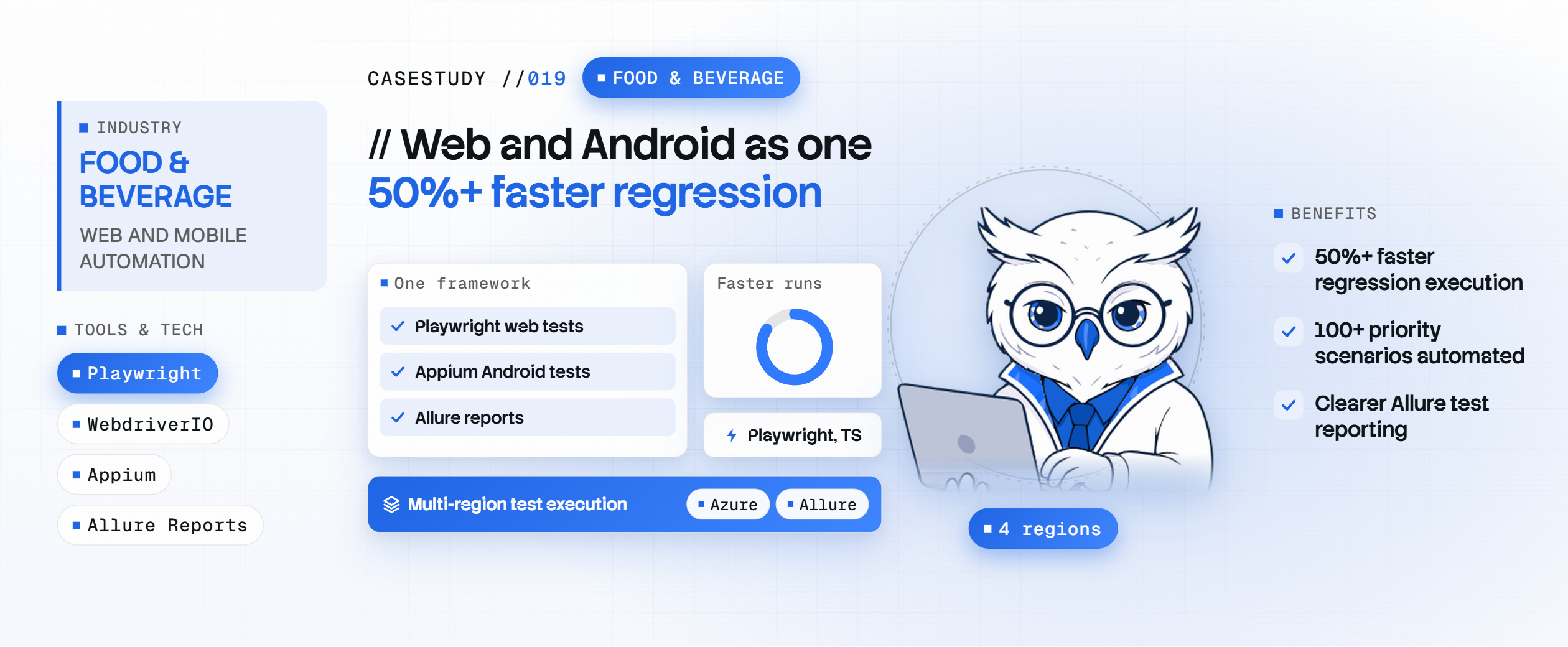
// From 3-Day Regression Cycles to Sub-10-Minute PR Feedback.
// Latest Articles.
// Questions, Answered.
Who is Continuous Automation built for?
It's built for teams practicing CI/CD who need quality gates that move at pipeline speed; QA teams buried under manual regression they don't have headcount for; engineering teams losing trust in a suite that's flaky more than it's useful; and organizations scaling release velocity faster than their test coverage.
How is Continuous Automation different from traditional test automation?
Traditional automation runs in batches, often after code is merged. Continuous automation testing integrates into every commit, giving real-time feedback and stopping broken code before it merges.
Our UI changes almost every day. Can automation really keep up?
Yes. Self-healing frameworks use AI-powered locators that identify elements by intent, not hard-coded selectors, so tests adapt automatically when the UI changes.
Does Continuous Automation replace manual testing?
No. It automates repetitive regression checks so testers can focus on exploratory testing and edge cases that need human judgment.
How do you handle flaky tests?
Self-healing frameworks auto-update against UI change, data-driven testing removes environment-related failures, and parallel execution with retry logic catches real issues while cutting false alarms.
Why do automation suites become flaky over time?
Static selectors break when the UI changes, shared test data causes conflicts, and timing issues create intermittent failures. We use dynamic locators, isolated test data, and intelligent polling instead.
How early can automation run in CI/CD testing integration?
From the moment a developer commits code. Tests trigger on every commit, pull request, and build stage, often within seconds of a push.
Does Continuous Automation slow down CI/CD pipelines?
The opposite. Intelligent orchestration runs only the tests affected by a change, and parallel execution completes suites in minutes, not hours.
What types of tests are included?
Unit tests, API contract tests, end-to-end UI tests, and visual regression checks, covering the full stack in one continuous testing services engagement.
Is this a one-time setup?
No. It is an ongoing practice. We run monitoring and monthly health checks so the framework evolves as your application scales.
How does this support Shift Left?
By moving quality checks upstream into developer workflows and early CI stages, so issues surface before they reach QA or production.