
// Quality Engineering For
Platforms That Shape Learning.
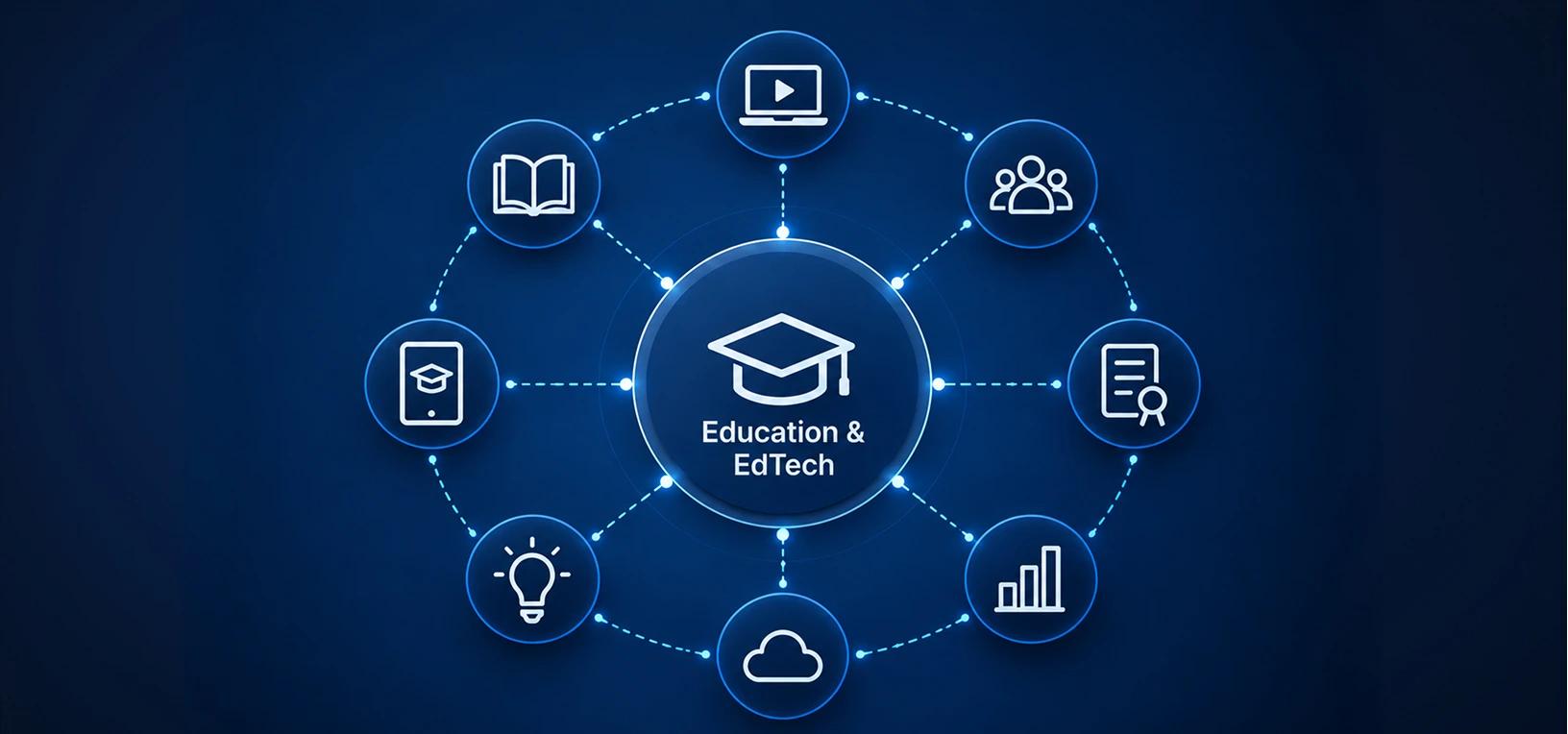
EdTech platforms must earn trust. From exam-day load spikes to FERPA compliance to adaptive learning accuracy, Jignect delivers QE that keeps learning continuous, secure, and accessible for every student.

What We Test. What We Validate. What We Protect.
Eight core areas of excellence in EdTech quality engineering, from exam-day load to accessibility to adaptive learning accuracy.
LMS Platform Testing
//01Moodle, Canvas, Blackboard, and custom builds tested for course enrollment, content delivery, grade book accuracy, and role-based access control.
Performance & Exam-Day Load Testing
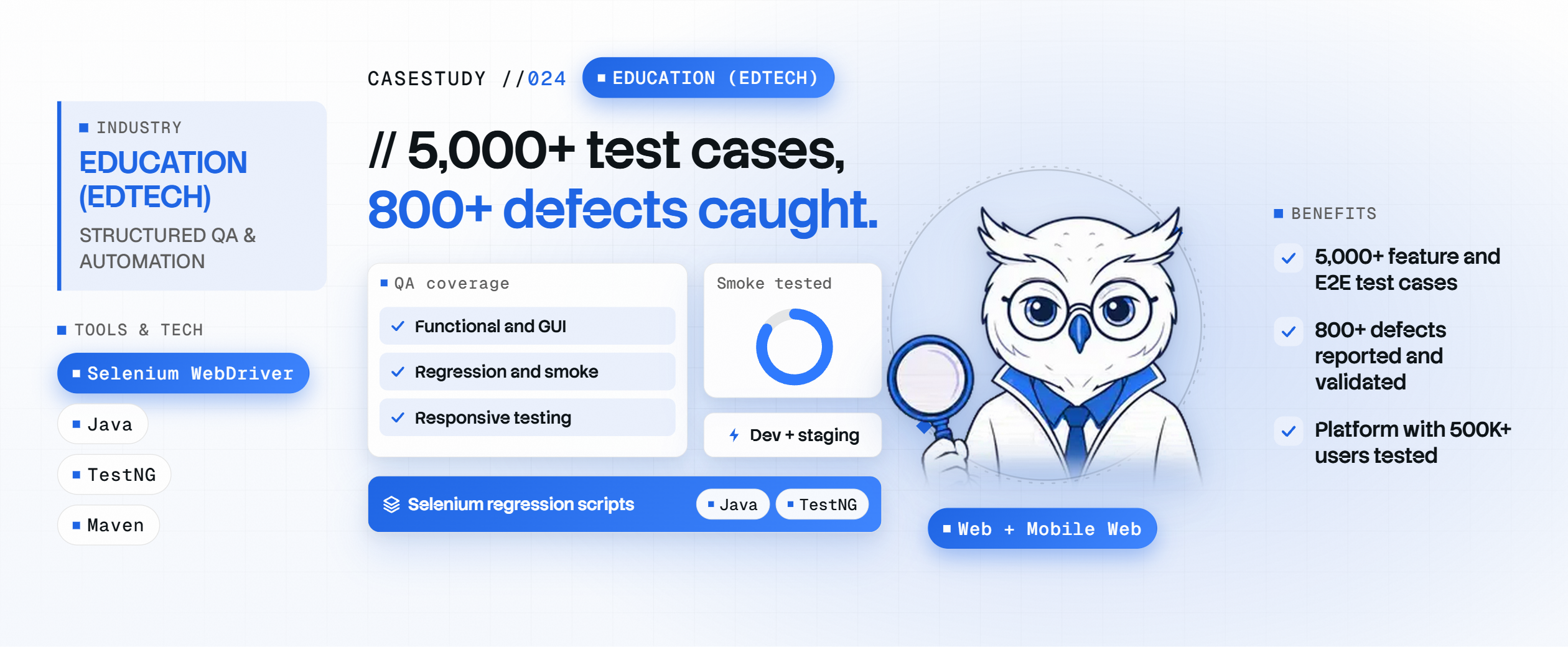
//02Concurrent user spike handling, database performance, API response times, and graceful degradation, validated at 500K+ simultaneous learners.
Student Data Privacy & FERPA Compliance
//03Data access logs, parental consent workflows, encryption validation, data retention policies, and vendor DPA audits for FERPA/COPPA compliance.
Accessibility & Section 508 Testing
//04WCAG 2.1 AA audits, screen reader compatibility, keyboard-only navigation, color contrast validation, and focus management for inclusive design.
Adaptive Learning & AI Testing
//05Algorithm accuracy validation, personalization path logic, learner model updates, A/B test statistical rigor, and cold-start handling.
Video & Multimedia QE
//06CDN performance, adaptive bitrate switching, caption accuracy and sync, cross-device playback, and low-bandwidth validation for streaming content.
Assessment & Proctoring Testing
//07Timer synchronization, proctoring reliability, anti-cheating detection, question bank randomization, and grade accuracy for exam integrity.
Mobile & Offline Learning QE
//08Progressive web app features, offline sync accuracy, low-bandwidth performance, mobile responsiveness, and battery optimization for on-the-go learning.



// Systems & Platforms We Test.
LMS Platforms (Moodle, Canvas, Blackboard)
Student Information Systems (SIS)
Virtual Classroom & Video Platforms
Assessment & Proctoring Tools
Adaptive Learning Engines
Mobile Learning Apps
Content Authoring Tools
Parent & Guardian Portals
School Administration Systems
Digital Library & Content Platforms
// Our Five-Phase QE Approach
Platform Discovery & Learner Journey Mapping
We map every learner path and identify critical workflows, producing a journey map, risk assessment, and defined test scope.
Compliance & Accessibility Audit
FERPA, COPPA, and WCAG audits build your compliance roadmap, backed by a gap analysis against current platform behavior.
Risk-Based Test Design
Test cases for high-risk workflows, prioritized by learner impact, backed by an automation framework and risk matrix.
Continuous Integration Testing
QE integrated into your CI/CD pipeline, testing every build with an automated test suite and daily reports.
Release & Exam-Season Support
Release readiness validation plus 24/7 monitoring and incident response during exam-season and other critical periods.
// How We Help Teams Ship Faster with Confidence.

// What Engineering Teams SayAbout Working With Jignect.

// Questions, Answered.
What's the difference between QA and QE?
QA focuses on processes and compliance. QE is proactive: we architect testing, build automation frameworks, and integrate quality into your development workflow. EdTech QE requires both rigor and innovation, which is why schools and platforms treat us as an edtech testing company offering education software QA services and elearning platform testing.
How do you test accessibility at scale?
We combine automated WCAG scanning, manual screen reader testing, and testing with assistive technology users. Automation catches 80%, the critical 20% needs human expertise with tools like NVDA, JAWS, and VoiceOver.
Can you test exam-day scenarios without real students?
Yes. We simulate exam-day load with synthetic users, validate timer synchronization, test proctoring workflows, and stress-test the backend, at 500K+ concurrent learners.
How do you stay FERPA/COPPA compliant during testing?
We use masked test data, no real student names, emails, or IDs. We audit data retention, validate consent workflows, and ensure vendors sign Data Processing Agreements (DPAs).
What happens after you find issues?
We prioritize by learner impact. Exam failures, data leaks, and accessibility blockers get immediate fixes. We track remediation, re-test, and sign off on release readiness.
How do you handle exam-day traffic spikes and concurrent user load?
We perform exam-day stress testing, spike simulation, and concurrent user validation, identifying bottlenecks before students experience downtime at 500K+ simultaneous learners.
How do you protect student data under FERPA and COPPA?
We validate data handling workflows, parental consent flows, role-based access controls, and encryption compliance, auditing database access logs to keep FERPA and COPPA workflows airtight.
What accessibility standards do you test EdTech platforms against?
Section 508 and WCAG 2.1 AA compliance through screen reader testing, keyboard-only navigation, caption verification, and color contrast audits.
Can you validate adaptive learning and AI-driven recommendation engines?
Yes. We validate recommendation algorithm accuracy, personalization path logic, and learner model updates, treating adaptive learning AI as a feature that must be QE'd like any other.
What platforms and technologies do you test in EdTech?
LMS platforms (Moodle, Canvas, Blackboard), student information systems, virtual classrooms, assessment and proctoring tools, adaptive learning engines, and mobile apps, covering FERPA, COPPA, WCAG 2.1 AA, and Section 508.